NEWS:
OSU press release about ASASSN-24fw. (August 2025)
Jason Hinkle and Dom Rowan were awarded 2025 NASA Hubble Fellowship. (March 2025)
News about ASASSN-23bd, the closest yet TDE discovered! (March 2024)
Jason Hinkle was awarded a NASA FINESST grant. (August 2023)
ASAS-SN Sky Patrol V2.0 was made public (see the paper here.) (April 2023)
See more ASAS-SN News here.
ASAS-SN Publications and Public Data:
Papers |
Telegrams |
Transients |
Transients on TNS |
Citizen ASASSN |
Twitter |
Wikipedia
Sky Patrol V1.0 |
Sky Patrol V2.0 |
Variable Stars |
Photometry Database |
Binary Stars
Telescope status live (via LCO webcams):
South Africa  Chile
Chile 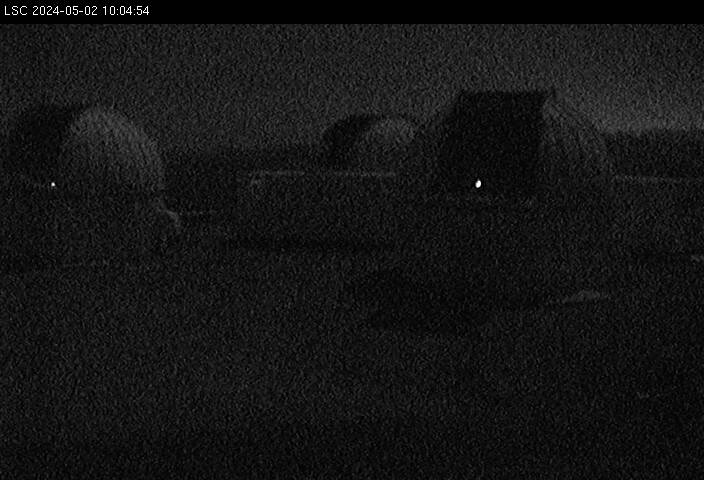 Texas
Texas 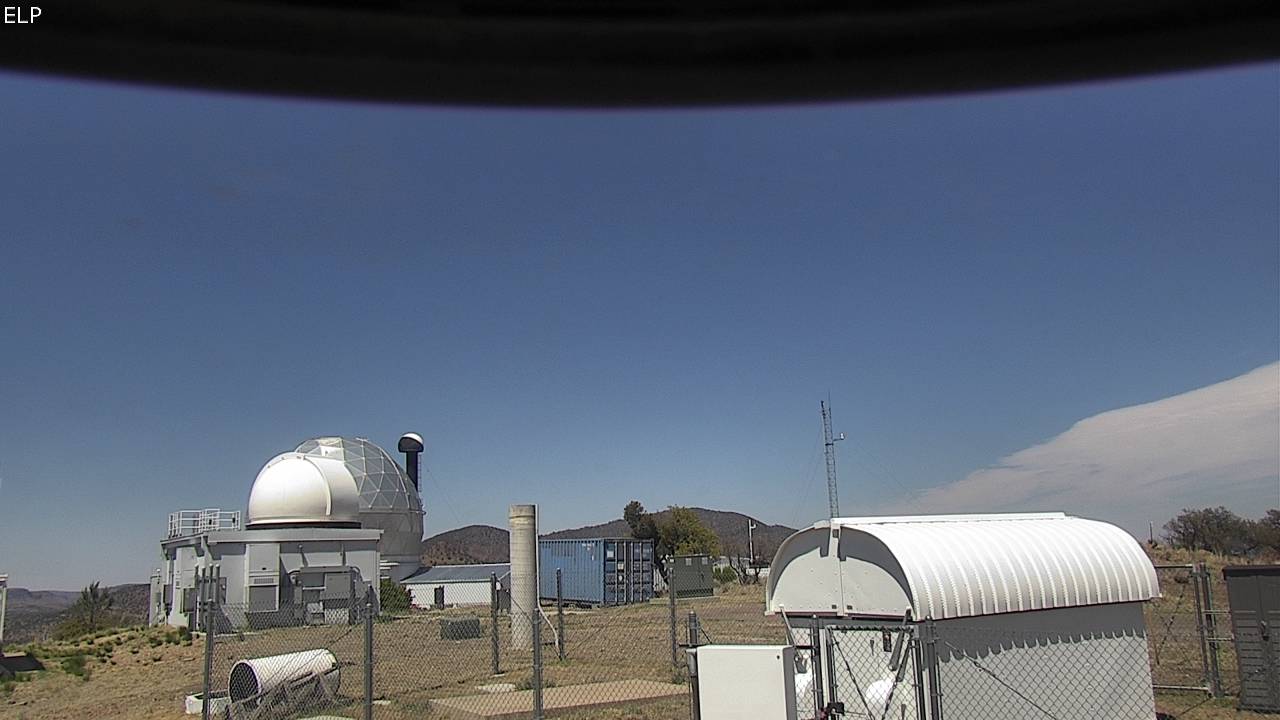 Hawaii
Our operations are partially funded by  grants GBMF5490 and GBMF10501
. grants GBMF5490 and GBMF10501
.
We are also partially funded by  5-year grant (2021-2026). 5-year grant (2021-2026).
Our telescopes are hosted by  . .
Our science is partially supported by NSF Grant AST-2407206.
ASAS-SN expansion was also possible with support from:
OSU Center for Cosmology and AstroParticle Physics  , ,
Peking University  ,
Mt. Cuba Astronomical Foundation ,
Mt. Cuba Astronomical Foundation  , ,
the Chinese Academy of Science South America Center for Astronomy
(CASSACA),
and the Villum Foundation (Denmark).
What is ASAS-SN?
The sky is very big: until recently, only human eyes fully
surveyed the sky for the transient, variable and violent events that are
crucial probes of the nature and physics of our Universe. We changed
that with our "All-Sky Automated Survey for Supernovae"
(ASAS-SN) project, which is
now automatically surveying the entire visible sky every night
down to about 18th magnitude, more than 50,000 times deeper than human
eye. Such a project is guaranteed to result in many
important discoveries, some of them potentially
transformative to the field of astrophysics---think about ASAS-SN
as the "SSST" - Small Synoptic Survey Telescope, complementing LSST
and other time-domain projects
by frequently observing the entire bright sky. Bright transients,
Galactic and extragalactic, discovered early by our high-cadence
survey, are especially valuable, as they are easy to study using
relatively modest size telescopes.
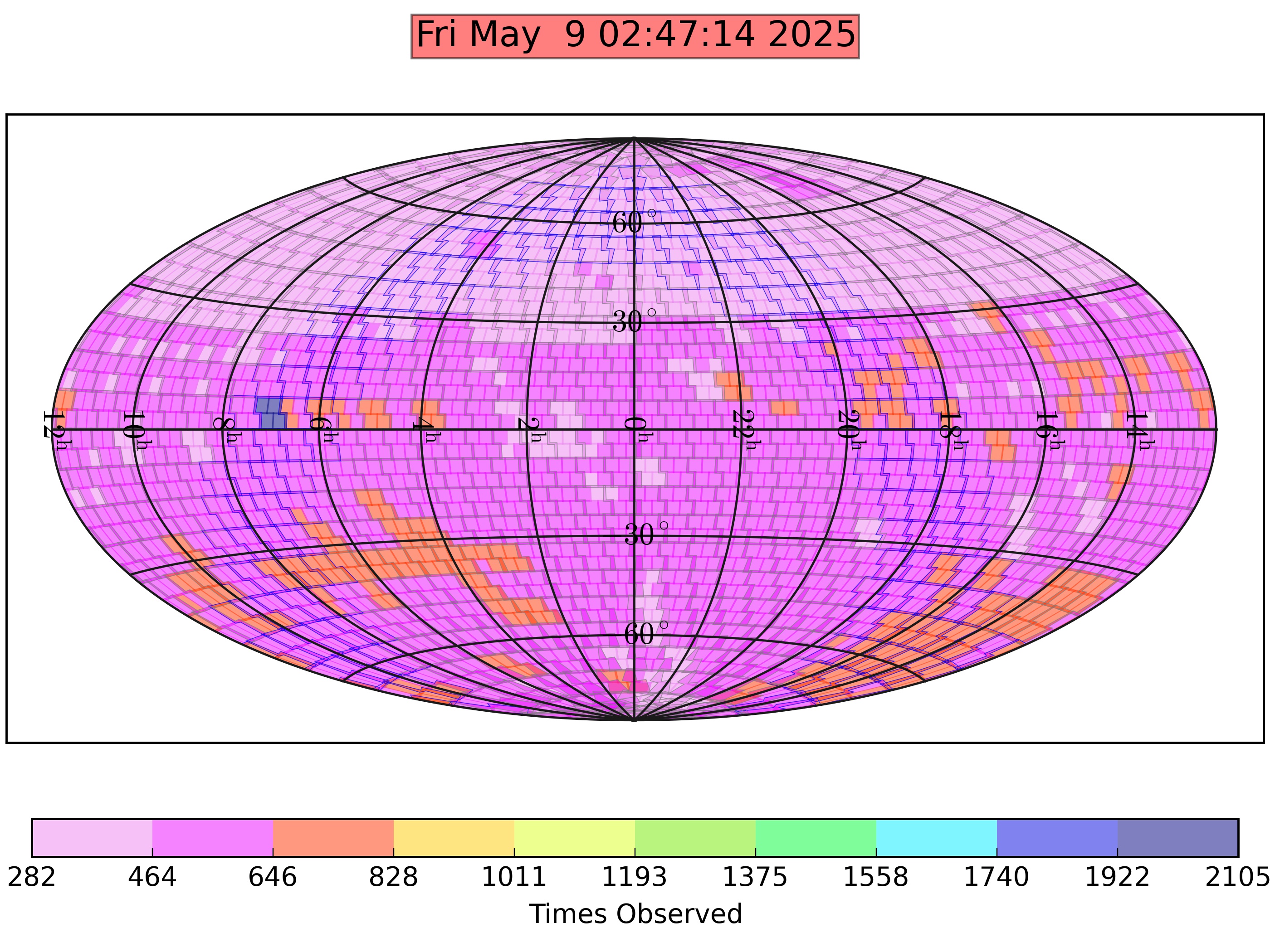
See below our sky coverage plot for the last 365 days - we are frequently observing the entire sky!
 ASAS-SN currently consists of 20 telescopes, distributed around the
globe. ASAS-SN first unit, known as "Brutus",
which also happens to be the name of the Ohio State mascot, comprises
of four robotic 14-cm telescopes deployed at the Hawaii station of
the Las Cumbres Observatory. ASAS-SN
second unit, named "Cassius",
also consists of four 14-cm telescopes deployed in Chile. In 2017,
with support from the Gordon and
Betty Moore Foundation grant GBMF5490, we deployed additional 8
telescopes at two other LCO sites: "Cecilia
Payne-Gaposchkin", deployed in South
Africa, and "Henrietta
Leavitt", deployed in Texas.
In addition,
using a combination of funds from Mt. Cuba Astronomical Foundation,
the Chinese Academy of Science South
America Center for Astronomy (CASSACA), and the Villum Foundation
(Denmark), in 2017 the 5th ASAS-SN unit, "Bohdan
Paczyński", was deployed in Chile.
All
these telescopes allow us to survey the entire visible sky every
night, and are making our network much less sensitive to weather
conditions.
ASAS-SN currently consists of 20 telescopes, distributed around the
globe. ASAS-SN first unit, known as "Brutus",
which also happens to be the name of the Ohio State mascot, comprises
of four robotic 14-cm telescopes deployed at the Hawaii station of
the Las Cumbres Observatory. ASAS-SN
second unit, named "Cassius",
also consists of four 14-cm telescopes deployed in Chile. In 2017,
with support from the Gordon and
Betty Moore Foundation grant GBMF5490, we deployed additional 8
telescopes at two other LCO sites: "Cecilia
Payne-Gaposchkin", deployed in South
Africa, and "Henrietta
Leavitt", deployed in Texas.
In addition,
using a combination of funds from Mt. Cuba Astronomical Foundation,
the Chinese Academy of Science South
America Center for Astronomy (CASSACA), and the Villum Foundation
(Denmark), in 2017 the 5th ASAS-SN unit, "Bohdan
Paczyński", was deployed in Chile.
All
these telescopes allow us to survey the entire visible sky every
night, and are making our network much less sensitive to weather
conditions.
ASAS-SN Team:
Chris Kochanek,
Kris Stanek,
Evan Jennerjahn,
Michael Tucker,
John Beacom,
Todd Thompson (Ohio State);
Ben Shappee,
Kyle Hart,
Dhvanil Desai,
Willem Hoogendam (IfA, Hawaii);
José Luis Prieto (Universidad Diego Portales; MAS);
Joseph Brimacombe (Coral Towers Observatory);
Subo Dong (KIAA-PKU);
Maximilian Stritzinger (Aarhus);
Laura Chomiuk,
Jay Strader (MSU);
Anna Franckowiak (University of Bochum);
Ondřej Pejcha (Charles University);
Xinyu Dai (University of Oklahoma);
Katie Auchettl
(University of Melbourne);
Elias Aydi (Teaxs Tech);
Jason Hinkle (University of Illinois Urbana-Champaign);
Dom Rowan (UC Berkeley).
Our past collaborators include David Bersier, Jon Brown,
Tom Holoien, Tharindu Jayasinghe, Adam Kawash, and others.
We thank Las Cumbres Observatory and its staff for their
continued support of ASAS-SN: we truly could not do this without your
help.
|


