
Astronomy 161
Introduction to Solar System Astronomy
[Office Hours
|
Syllabus
|
News
|
Lectures
|
Homework
|
Exams
|
Internet Resources
|
Further Reading
|
Copyright Statement
]
- Prof. Paul Martini:
- Office: 4021 McPherson Lab (292-8632)
- Office Hours: Tue, Wed, Thur 2:00-3:00, or by appointment
- E-Mail: martini.10@osu.edu
- Mr. Ben Shappee (Teaching Assistant)
- Office: 4031 McPherson Lab, (292-7881)
- Office Hours: Thursdays 1-3pm
- E-Mail: shappee.1@osu.edu
- The syllabus is available in pdf format.
Grades are now posted. I hope you enjoy your break!
The links below lead to outlines of the lectures. These are intended to
provide a guide to the subjects that will be covered during class and
are by no means transcripts of the lectures.
I strongly encourage class attendance, as not all of the essential class
material will appear on these web pages or in the text.
Outlines will generally become available at the beginning of the week in which
the lectures occur.
I recommend that students make copies of these outlines before
class and then take notes on these outlines during class.
Here is a copy of the Math and Units Review
Sheet from the first day of class.
There will be four homework assignments during the quarter. Homework will
be handed out on Fridays and due the following Fridays.
Homework Schedule
- Homework 1: Due Friday, January 22
- Homework 2: Due Friday, February 5
- Homework 3: Due Friday, February 19
- Homework 4: Due Friday, March 5
I will post the answers to the homework questions after each assignment is due.
There will be four quizzes during the quarter in addition to the final. All
of these quizzes will be on Fridays.
The four quizzes and the final are closed-book and closed-notes.
You only need to bring a #2 pencil to these exams.
Quiz Schedule:
Final Exam: The final exam will be on Wednesday, March 17 from 9:30am to
11:18am in the classroom.
Here is a Final Exam Study Guide
- 21st Century Astronomy Website
- Lecture Outlines
- Planetarium and Roof Night Schedule
- Prof. Richard Pogge's Selected Astronomical Internet Links for further exploration
Some Astronomy Picture Sites:
- Astronomy Picture of the Day
- NASA Planetary Photojournal
A great collection of planetary images at JPL.
- Astrophotography by Anthony Ayiomamitis
- Latest pictures from the Saturn system
returned by the Cassini spacecraft.
- Latest pictures from the Mars Exploration Rovers Spirit and Opportunity.
- Latest pictures from the Hubble Space Telescope
- Pictures from the Chandra X-ray Observatory
- Pictures from the Spitzer Space Telescope
- This Week's Sky at a Glance courtesy of Sky & Telescope Magazine
Below I have compiled a list of books that expand on the material
covered in the course for those interested in further reading.
These books are not required, or even recommended, for this course.
They are listed here purely for the benefit of students interested
in exploring some of the topics from class in further detail on their
own.
- The Discoverers: A History of Man's Search to Know His World and Himself by Daniel J. Boorstin
- This book, by the late Librarian of Congress, is an excellent overview
of how human discovery and invention have shaped history. I drew many
historical anecdotes from this book to supplement the lectures, including
those on time, the calendar, and other aspects of the history of science.
- Longitude: The True Story of a Lone Genius Who Solved the Greatest Scientific Problem of His Time by Dava Sobel
- An excellent and very readable account of John Harrison's invention
of a precise, compact chronometer to solve a centuries-old scientific
problem. The work of many great scientific minds on the longitude problem
are well placed in a historical context.
- The Book Nobody Read by Owen Gingerich
- A narrative of the author's search to track down all remaining copies of
Copernicus' De Revolutionibus, along with an engaging description
of the Copernican Revolution and the dawn of modern astronomy.
All of the written materials provided in these web pages are
copyrighted by the course instructor, except
as noted. In addition, some images and animations are also copyrighted
by the instructor, while others are copyrighted by the original sources.
Please read the Copyright Statement before you
make copies of any of these web pages for any purpose. Use of these notes
implies that you have read and understood the copyright statement.
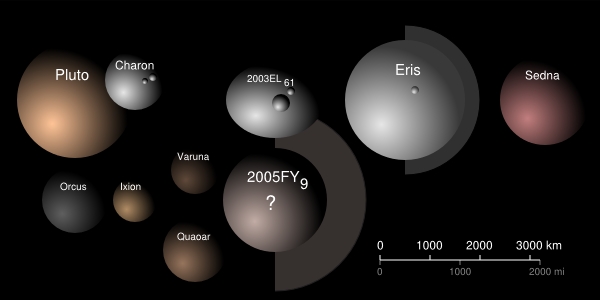
The image at the top of this page is from NASA.
Updated: 2010 March 1
Copyright © Paul Martini All Rights
Reserved.